
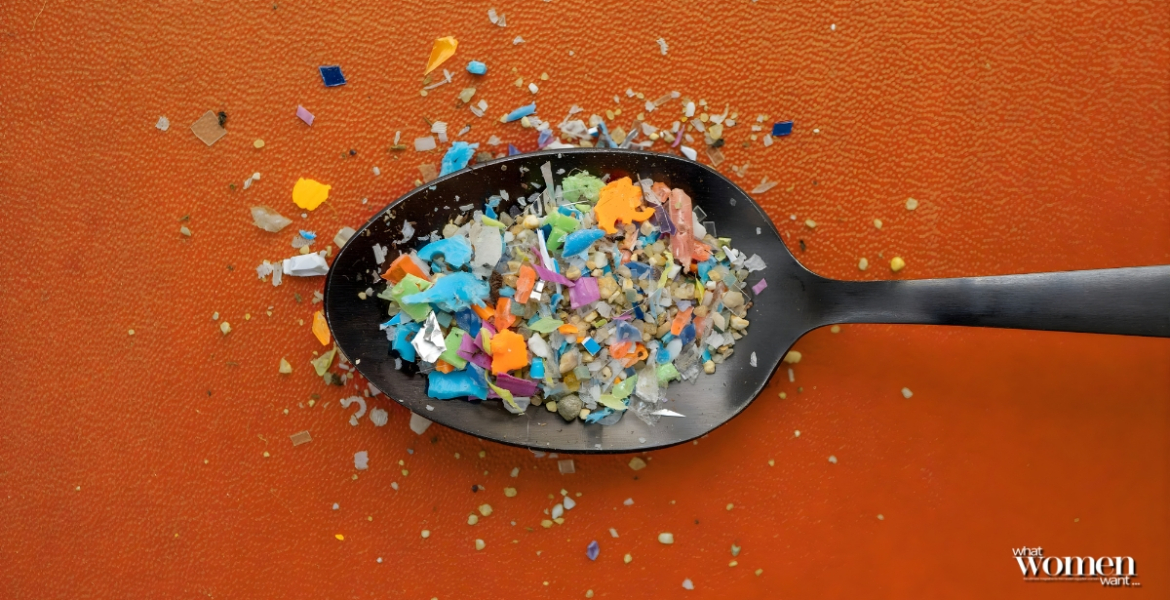
The effects of microplastics are long-lasting and difficult to get rid of quickly. Every year, more than 400 million tonnes of plastic are produced, which ultimately end up as plastic waste all around us, according to the United Nations.
Plastic takes many years before it completely decomposes. It takes 20 to 500 years to decompose, depending on the material and structure. This leads plastic to degrade into smaller and smaller pieces, resulting in microplastics emerging and infiltrating our ecosystem.
What Are Microplastics?
Microplastics are extremely small pieces of plastic debris. They are less than five millimeters in size. These plastic particles can be harmful to our aquatic life, our bodies, and our minds, as they carry environmental toxins and can also interfere with our hormones.
Types of Microplastics
Microplastics are the result of multiple sources, but the two main sources are primary microplastics, like microbeads, and secondary microplastics, which result from the breakdown of larger plastic products.
Some plastics are produced to be small, like microbeads. Face washes, toothpaste, and personal care products contain microbeads for their exfoliating properties. However, most microplastics result from larger plastic waste. For example, the breakdown of plastic bottles and bags, food wrap, takeaway containers, and polyester clothes.
Dangers of Microplastics
Many traces of Microplastics have been found in our environment, our marine life, air, water, and soil, as well as in animals and humans.
In Marine Life
When microplastics travel into the ocean, sea creatures at the base of the food chain consume them, as well as other filter-feeding fish, which are then consumed by the fish we eat. At the end, these fish end up on our plates at home, unknowingly consuming microplastics.
Envirnoment
Microplastics travel through the air; studies show that people inhale 68,000 microplastic particles every day.
Moreover, these particles also reach our food, as they enter agricultural soil through sewage sludge, which is used as crop fertilizers. This results in humans eating food that contains microplastics, like vegetables and fruits. They also travel through water filter systems, which we drink from, because of their small size.
In Human Beings
Consequently, we consume or inhale these particles. According to the UN Environmental Programme, A 2019 study found that adults could potentially be consuming between 39,000 and 52,000 microplastics yearly on average.
What Can We Do?
There are some ways we can avoid using plastics or minimize their usage, decreasing the amount of microplastics, as the effects of microplastics affect us all. We can reduce our daily one-use plastics. It’s always better not heat food in plastic containers, as plastics leach onto things more easily when heated. Use cotton tote bags to carry groceries instead of using plastic bags. For clothes, we can switch to organic material wear as much as we can.