
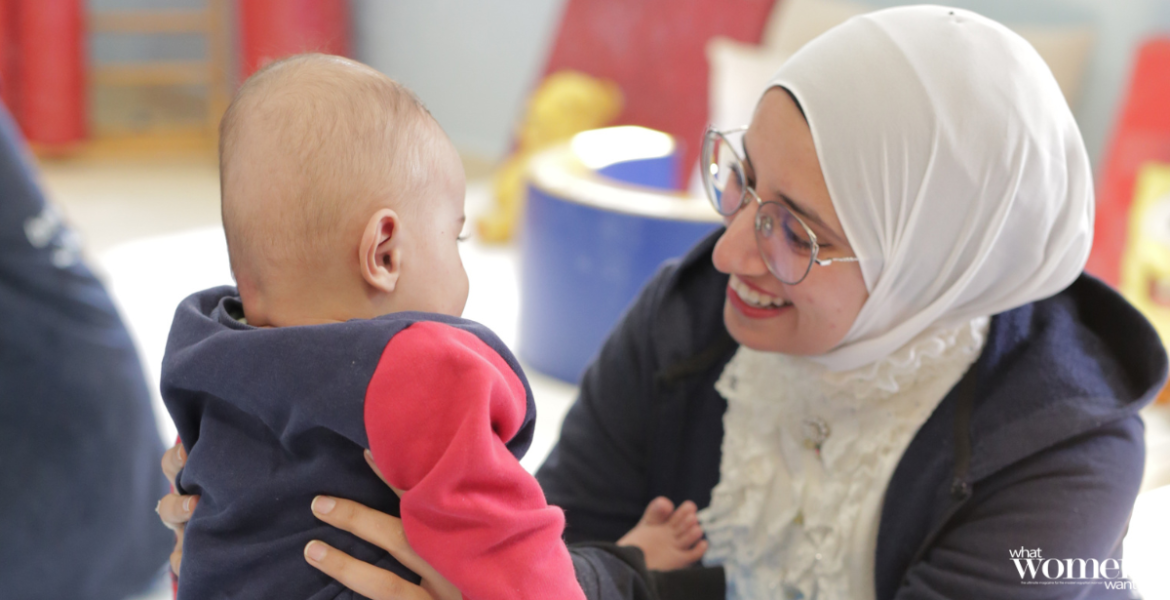
For over two decades, FACE for Children in Need has been at the lead of a profound shift in how Egypt cares for its most vulnerable children. From Institutions to Families: FACE is Redefining Child Protection in Egypt. It was founded in 2003 by Flavia Shaw-Jackson. The organization was born out of a desire to move beyond merely providing temporary shelter and toward a permanent. Their transformative goal is integrating children into loving, stable families.
Today, FACE operates as an NGO dedicated to protecting, nurturing, and reintegrating vulnerable children. This includes street children, abandoned babies, and those at risk.
While institutional care was once the standard, FACE has shifted the pattern, sticking to the principle that “institutional placement is the last resort” and that family reintegration is the priority.
The overarching theme: Advocacy and Strategic Change
Nabila El-Gabalawy, the technical director at FACE, explains that the organization has always served two primary populations: orphaned or abandoned children and those known as “children without shelter” (street children).
“Families abandon children for various reasons, poverty, informal marriage, or domestic disputes,” Nabila says.
For street children, the reality is often that the “conditions of the street were kinder to them than their family conditions.”
To address this, FACE has evolved from managing centers to becoming a key partner in national policy. A major recent milestone was their advocacy campaign to lower the legal age for Kafala (foster care in English).
“We worked with the Ministry of Health and the Ministry of Social Solidarity to lower the Kafala age from two years to three months,” She explains.
This change ensures that infants can be placed in families earlier, receiving vital care and immunizations sooner. This success has cemented FACE’s role as a trusted partner to the state, with the organization now contributing to the national strategy for alternative care.
The Process of Belonging: Inside the Kafala Unit
While advocacy changes the law, the Kafala Unit changes lives.Reham Alaa, manager of the unit, emphasizes that the matching process is deeply human and highly disciplined.
Reham explains that specific procedures greet families when they arrive at the center.
“This is not a supermarket where you browse for goods; these are our children, and they have rights.”
To ensure a successful, lasting connection, FACE mandates a strict process for prospective parents.
“As soon as a family approaches the center, there are a set of procedures, including what we call “reception procedures”. These reception procedures include certain rules specific to the facility, Reham explains.
First of all, there is a controlled observation system throughout the facility. Families do not roam the facility; instead, staff introduce them to children in a designated room to ensure a focused, respectful environment. Furthermore, once the team identifies a potential match, the family must complete at least six visits.
“The purpose is to build compatibility between the parents and the child,” Reham says. “It’s not just about the parents getting used to the child; it’s about the child feeling safe with them.”
FACE prepares families for the “post-transition” phase, where the child’s behavior might temporarily change as they adjust to a new environment, as their work doesn’t end when the child goes home.
“Our team, which includes three specialists, observes these visits to provide support and assess compatibility,” Reham notes.
The team uses standardized evaluation tools to prepare parents for both the logistical realities and the psychological needs of the child.
A Future Built on Connection
The synergy between FACE’s high-level advocacy and its on-the-ground operational precision is what makes the organization a model for child protection in Egypt.
From Institutions to Families: FACE is Redefining Child Protection in Egypt. By considering every child as a human rather than a statistic, and working alongside the government to promote policies that prioritize early family placement.
FACE proves that the future of child welfare in Egypt relies on the strength of the family unit. As Nabila Gabalawy puts it, their goal is simple: to stop children from spending long periods in institutions and, instead, to surround them with the love and stability of a home.