
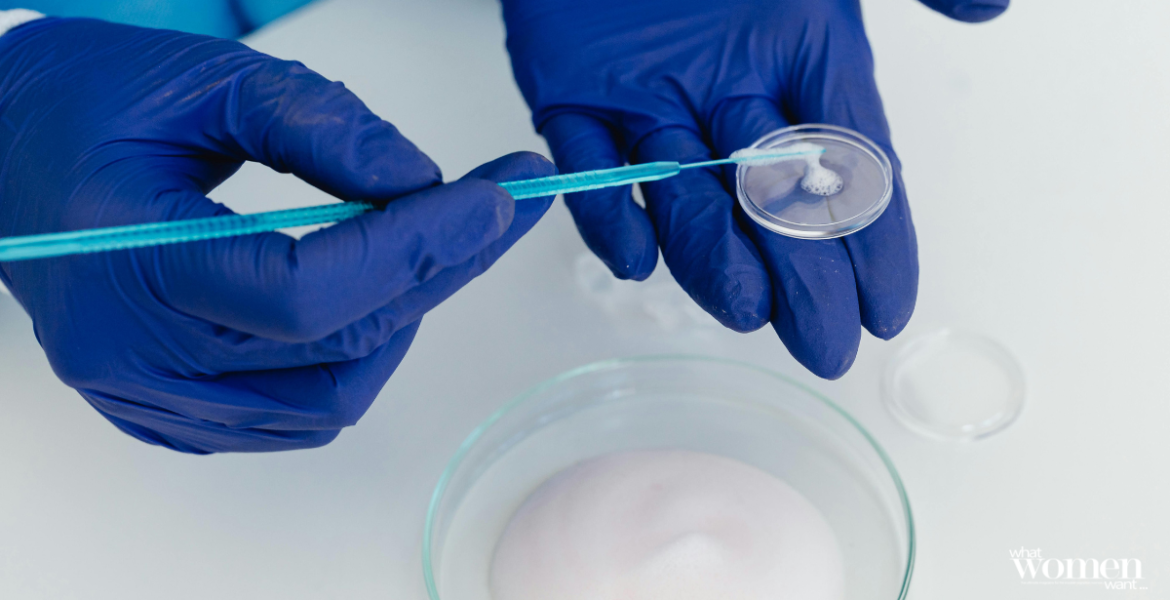
For many Egyptian women, the mention of a Pap smear triggers immediate anxiety. With a lot of misconceptions women have, The Truth Behind the Test: Debunking Pap Smear Myths in Egypt. Some fear it’s a painful surgery, others believe it’s only for older women, and many feel it is a test they simply don’t need if they feel healthy.
To clear the air, we’ve gathered the facts and the expert insights of Dr. Jasmine Ahmed Youssef, consultant in obstetrics, gynecology, and infertility at Cairo University Hospitals, to tackle the most common misconceptions.
Myth 1: “It’s a painful procedure.”
This is perhaps the biggest barrier. Many women imagine a Pap smear as a surgical or painful event.
The Reality: It is a 5-minute routine check.
Dr. Jasmine notes, “Many women misunderstand that it doesn’t even hurt. During the exam, the patient might not feel anything at all. The sample is taken simply for peace of mind.”
Myth 2: “I only need it after menopause.”
In the past, the medical conversation in Egypt was different, which led to a widespread belief that this is an “older woman’s test.”
The Reality: Screening should actually start at the age of 35. Dr. Jasmine explains the shift:
“5 to 10 years ago, the smear wasn’t widespread; we used to only request it after menopause.”
While international rules vary, clinical practice in Egypt generally recommends starting regular screenings at age 35 every three years. However, this schedule changes every year if “red flags” are present, such as the detection of the HPV virus, the presence of an ulcer on the cervix, or experiencing contact bleeding during sexual intercourse.
Myth 3: “If I feel fine, I don’t need a checkup.”
Egyptian culture often treats doctors’ visits as “emergency only.” We wait for pain before seeking help. But the reality is that cervical cancer is a silent condition. The Pap smear’s entire purpose is to find precancerous cells, which are cells that aren’t cancer yet but could become cancer later. Finding them early means you can resolve the problem before it ever starts.
Myth 4: “A pelvic exam and a Pap smear are the same thing.”
Many women go for a general checkup and assume they’ve been screened.
The Reality: A pelvic exam is when a doctor feels the organs to check for health. A Pap smear is a specific test where a tiny brush collects cells. As Dr. Jasmine points out, doctors usually suggest the smear if they see something “concerning” or if there is a risk of HPV, but you should always ask, “Can we do a Pap smear today?”
Myth 5: “I’ve had a hysterectomy, so I’m done with testing.”
The Reality: It depends on the surgery. If you still have your cervix, you must continue testing. Even if the cervix was removed, if the surgery was due to cancer or precancerous cells, you still need regular checkups to ensure the surrounding tissue stays healthy, not just the Pap smear test but different screenings.
How to Get Ready for Your Test
If you are nervous, remember that preparation makes the test more accurate and faster. Follow these three simple rules:
- The Timing: Schedule the test for the week after your period ends.
- The 48-Hour Rule: Avoid vaginal sex and do not use any vaginal creams, tampons, or douches for two days before your appointment.
- The Comfort: Wear comfortable clothes. The test itself takes less than 10 minutes, often shorter than your wait in the lobby!
Taking the Lead: Your Health, Your Peace of Mind
The Truth Behind the Test: Debunking Pap Smear Myths in Egypt. The stigma surrounding the Pap smear is slowly fading in Egypt, but there is still work to do.
“Unfortunately, not all women are aware of the smear,” says Dr. Jasmine. “We are trying to educate patients about cervical cancer and introduce them to the necessity of doing it.”
Don’t let a misconception stand in the way of your health. A few minutes of discomfort (or just “awkwardness”) is a small price to pay for a lifetime of protection.