
Mazg is a cultural and arts foundation dedicated to supporting the comic industry, focusing on non-traditional, under-exposed, and underground art forms. Their latest exhibition, Thorns and Cactus, shows how Mazg curates stories of adaptation. Since its founding in 2013, Mazg has worked to empower both professional and emerging artists who want to work in the comic industry. Mazg offers workshops and an online school dedicated to teaching people the art of comics.
“Our main aim was to revive the comic industry,” Sara El Masry says. “After we launched the workshops and the online school, we started curating exhibitions, so participants can develop work around the exhibition’s theme in our studio, and those stories would later be published.”
An Exhibition Rooted in Adaptation
We interviewed Sara El Masry, the project manager at Mazg, for an inside look at their latest exhibition, Thorns and Cactus, presented as part of D-CAF, which marks Mazg’s second collaboration with D-CAF. This exhibition marks the foundation’s fourth exhibition. Thorns and Cactus, how Mazg curated stories of adaptation. The exhibition explores how human beings can evolve and survive according to their environment over time.
Thorns and Cactus reflect the world we live in today. Sara explains that the guiding idea was simple yet crucial: “We wanted art to reflect reality.”
Patience, Persistence, and the Cactus Motif
Patience and persistence emerged as a key conceptual layer of the exhibition. The theme talks about both the strength and the burden of endurance, something that for many people is not a choice but a necessity. With this in mind, Mazg invited Arab comic artists from around the world to create comics based on real or imagined stories about adaptation.
“We were talking about how the world has completely changed, and thinking about how we adapt to that change while still expressing ourselves and what’s happening around us,” Sara describes.
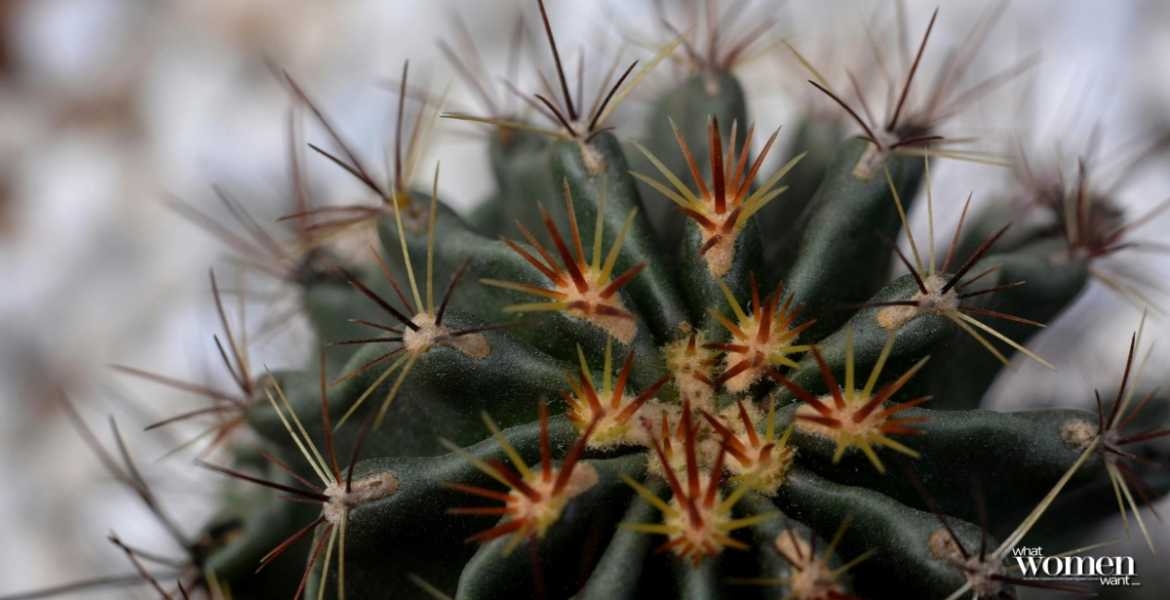
The exhibition’s title draws from the dual symbolism of the cactus itself. Sara elaborates on the motif of the cactus.
“From afar, the cactus and thorns look beautiful, but once you get close, they can hurt you. From here, we wanted to see how artists can tackle this theme in art.”
This metaphor shaped the exhibition’s central question: Can we, like the cactus, tell stories of our own persistence in the face of life’s challenges?
Curation as a Shared Space for Artists
The group exhibition features 45 stories, 39 by women and 6 by men, highlighting a wide range of voices and perspectives.
Text played a central role in this year’s curation. Sara explains that,
“Texts are integral in shaping our exhibition’s atmosphere, which led the team to discover Iraqi poet Mubeen Khishany. His poetry was incredibly moving and closely aligned with the exhibition.”
Mubeen Khishany is a contemporary Iraqi poet who published his first poetry collection in 2021.
“He immediately welcomed the collaboration, and visitors were deeply affected by his words,” she adds.
Exhibiting Amid Ongoing Realities
“One of the hardest things we faced was celebrating the exhibition while the war in Gaza was still ongoing,” Sara shares.
This posed a duality between celebration and sadness as the exhibition subtly reflects reality. Therefore, celebrating the exhibition proved difficult, particularly with Palestinian artists participating while the war in Gaza continues.
When Art Truly Connects
Ultimately, the exhibition’s success lies in its emotional resonance with visitors. As Thorns and Cactus show how Mazg curates stories of adaptation. Reflecting on audience reactions. Sara shares a moment that stayed with her:
“There was one girl who told me she stood in front of a story and cried. This in my opinion, is what it means to enjoy art, understand it, and really feel it.”